Equipment Guides
Are Dental Loupes “Nice-to-Have” or “Clinically Essential” for Orthodontists?
2026-10-06 · Jizhou Select
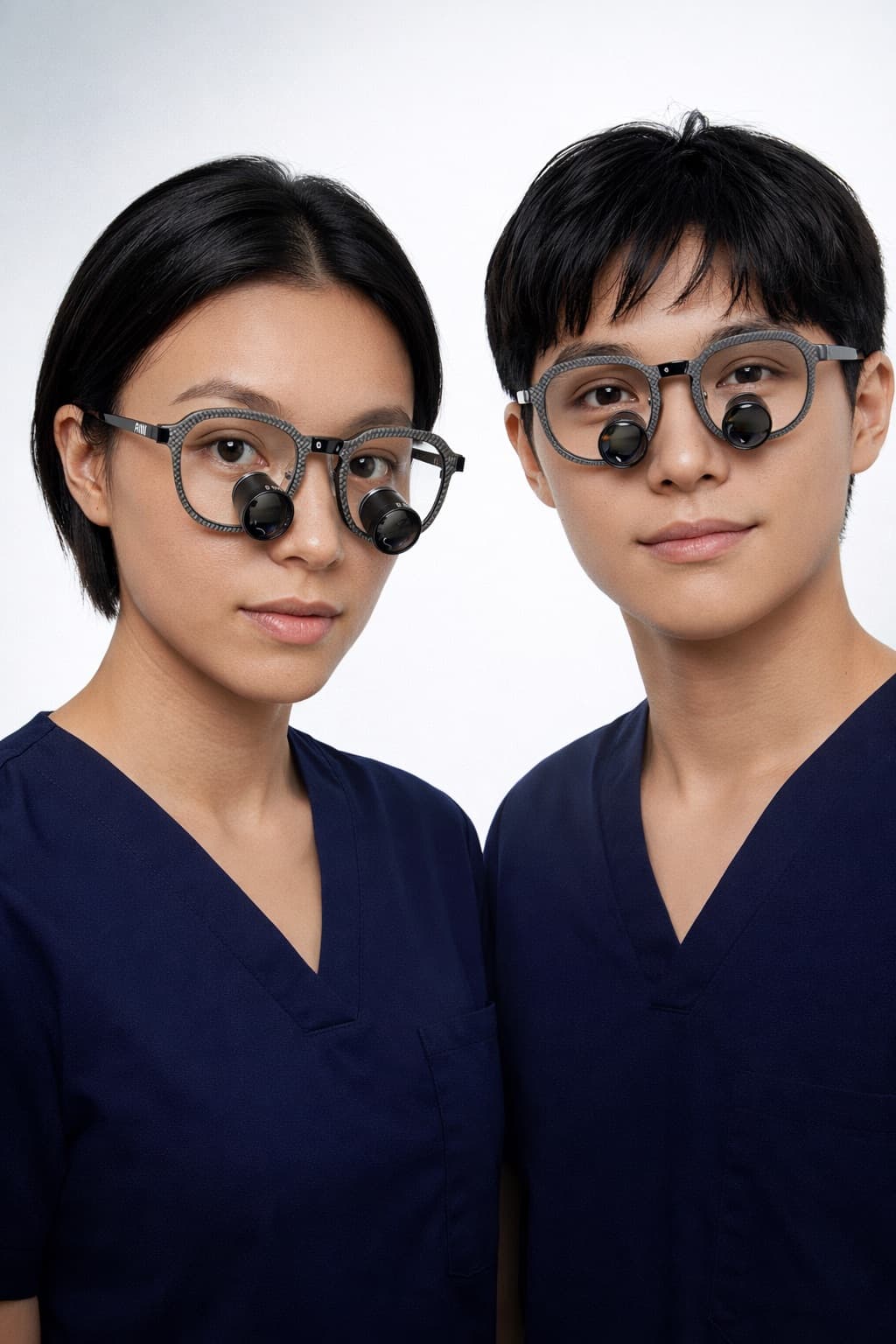
For many orthodontists, dental loupes are no longer just a nice-to-have. They are a practical precision and ergonomics tool that can support common orthodontic tasks such as bracket placement, attachment bonding, and debonding. Whether they become truly essential depends on your case mix, working posture, and comfort with magnification, but current evidence and clinical experience point in the same direction: loupes can be clinically useful.
What Does the Research Say About Loupes in Orthodontics?
Historically, much of the support for loupes came from clinical experience. Recent studies are beginning to test that experience more directly.
1. More accurate bracket positioning?
A clinical trial registered in 2025, with 18 adult participants requiring orthodontic treatment, investigated whether dental loupes improve bracket placement accuracy compared with unaided direct vision. In mild-to-moderate crowding, loupes may help clinicians identify tooth-surface anatomical landmarks more clearly and reduce positioning errors. Clinical feedback indicates that bonding accuracy can influence treatment duration and outcome; with loupes, details such as marginal ridge alignment and consistent bracket height may be easier to recognize.
2. Possible efficiency gains during bonding?
Bracket bonding is often a precise and time-consuming task. A study of patients with dental crowding using 3.5x loupes for bracket bonding produced preliminary results suggesting that loupes may help improve operating speed and patient comfort. Clinical feedback also suggests that 3.5x straight loupes offer a wider field and a relatively quick learning curve, making 3.5x a common magnification choice among some orthodontists.
3. Safer bracket removal?
During debonding, reducing the risk of enamel damage while removing adhesive is a major concern. Related research suggests that using loupes may help improve the quality of bracket removal. Clinicians report that during debonding, a clearer view under magnification may help identify the adhesive interface more accurately, which may help reduce the risk of enamel damage.
4. More precise attachment bonding?
A 2026 study suggests that using dental loupes during clear aligner attachment bonding may help improve attachment placement precision and reduce the residual area of excess composite resin.
Which Clinical Pain Points Can Loupes Help Address?
Pain point 1: Fine tooth-surface anatomy is hard to see
Bracket positioning relies on references such as marginal ridges, the clinical crown center, and occlusal contact points. In crowded dentition, these landmarks can be difficult to identify with the naked eye. Loupes at 2.5x–3.5x can magnify these structures and may help clinicians identify positioning references more clearly.
Pain point 2: Posture burden from long periods of looking down
Orthodontists often spend long hours bending forward and looking down. Research suggests that chronic back and neck pain is relatively common among orthodontists and is associated with prolonged poor posture, potentially contributing to musculoskeletal issues in the neck, shoulders, lower back, hands, and wrists. Loupes with well-designed optical angles may help clinicians maintain a relatively natural, more neutral cervical posture and reduce neck load, which may help with fatigue from long clinical work. Specific effects vary by product design and personal usage habits.
Pain point 3: Residual adhesive is difficult to remove
After bracket bonding, excess adhesive at the margins can increase the risk of plaque accumulation and gingival inflammation if not cleaned thoroughly. A clearer view under loupes may help clinicians inspect and more fully remove these residues.
How Should Orthodontists Choose Their First Loupes?
If you are considering your first pair of loupes, practical starting points are to prioritize straight TTL-style, low-magnification designs. 3.5x is one of the more commonly recommended magnifications because it can balance the ability to see adjacent tooth relationships with overall field of view. The final choice should be confirmed against your personal operating habits and the actual product parameters.
Because adaptation is individual, also consider working distance, frame fit, declination angle, and field width. These factors can influence how quickly the loupes feel natural in daily orthodontic use.
AcuView Straight Loupes for Orthodontic Magnification
AcuView straight loupes are offered as a global product for the clinical magnification needs of orthodontists and dentists, including bracket positioning, attachment bonding, and debonding. Dr. Jin Lei, an experienced orthodontist, offers the clinical perspective that precise bracket positioning in orthodontic treatment is built on a clear visual field, and choosing loupes suited to one’s operating habits is an important consideration for many orthodontists. AcuView straight loupes are designed to support that goal: helping clinicians bring relevant details into view so each bracket can be placed where it should be.
FAQ: Loupes for Orthodontists
What magnification is best for orthodontics?
For many orthodontic precision tasks, 2.5x–3.5x is a practical range, with 3.5x commonly chosen for bracket work. Higher magnification can narrow the field of view and require a longer adaptation period, while lower magnification may be easier to tolerate but less detailed. The best choice depends on your working distance, case types, and personal preference.
Straight vs prismatic loupes: which should I choose?
Straight TTL-style loupes typically offer a wider field of view and may be easier for beginners to adapt to, especially at low magnification. Prismatic or flip-up loupes can provide higher magnification, but often with a narrower field and a steeper learning curve. For many orthodontists starting out, a straight, low-magnification design is a practical first option.
Are loupes beginner-friendly?
Low-magnification straight loupes are generally considered relatively beginner-friendly, though adaptation still takes time. New users often start with shorter appointments and gradually increase usage as working distance and posture become more natural.
Why do ergonomics matter so much?
Orthodontists spend long hours in static, forward-bent positions. Loupes with appropriate declination angles may help support a more neutral neck posture and may reduce fatigue during long clinical sessions. They are not a substitute for an ergonomic setup, breaks, and good working habits, but they can be an important part of a more sustainable clinical routine.
Explore the AcuView straight loupes.