Why Loupes Still Need a Headlight
Start with the angle of the operatory light. The dental chair light enters the mouth from above and behind you — and your head, shoulders, and instrument hand all sit in its path. The oral cavity is a deep, narrow space; the spots that truly need to be seen — posterior proximal surfaces, the pulp chamber, canal orifices — are exactly the most shadowed ones. So you crane your neck, lean sideways, and ask the assistant to keep repositioning the light. That is how posture breaks down, little by little.
Then consider the loupes themselves. Loupes magnify; they do not emit light. The entrance pupil of the barrels is small, so the image through the lenses is inherently dimmer than the naked eye — and the higher the magnification, the less light each unit of the field receives. High-magnification loupes without coaxial lighting are like a microscope in a darkroom: the detail is enlarged, but you cannot see it clearly.
That is why loupes and a headlight form one system: the loupes handle "seeing," the headlight handles "lighting." Light fires coaxially along your line of sight — wherever your head turns, the light follows, and shadows are filled before they can form.
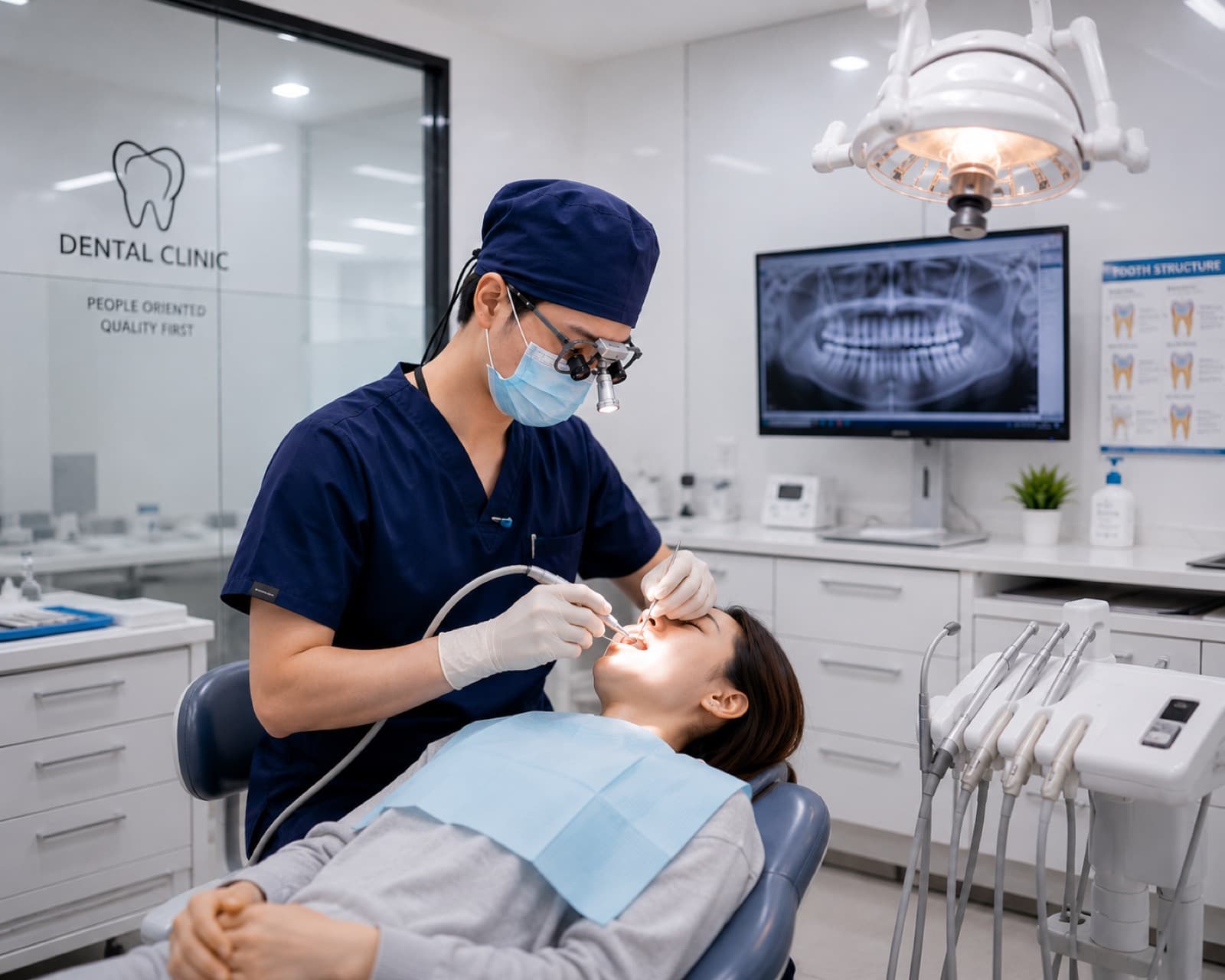
A coaxial headlight: light fires along the line of sight, so hand shadows no longer fall on posterior or deep-cavity fields.
Brightness: How Many LUX Does a Surgical Headlight Need
LUX is the unit of illuminance — how bright the spot is where it lands on the field. Dental headlights on the market range from 15,000 to over 100,000 LUX, but the answer is not "the brighter the better."
A rough guide by scenario: routine exams, prophylaxis, and fillings are comfortable at 20,000–40,000 LUX; deep posterior cavities, endodontic work, or pairing with high-magnification loupes at 4X and above (less light transmission, a dimmer image) calls for 40,000 LUX and beyond.
Why brighter is not always better
Excess brightness has three very real costs. First, spill: light beyond the field goes straight into the patient's eyes — they squint and flinch, and you have to stop and reassure them. Second, glare: enamel is highly reflective, and past a certain illuminance the fissure anatomy and preparation margins get washed out in a sheet of white. Third, visual fatigue: when a bright spot sits against a dark surround, the pupil keeps readjusting between light and dark — a morning of patients leaves your eyes sore.
The conclusion: more important than "maximum brightness" is adjustable output. Medium or low for daily work, high for deep cavities — a single-level high-output lamp and a two-level adjustable lamp are completely different clinical experiences.
CRI: When Shade Matching Fails, Suspect the Light First
CRI (color rendering index) measures how faithfully a light source reproduces an object's true colors, with sunlight as the perfect 100. Many critical judgments in dentistry are, at their core, "color questions": the difference between A1 and A2 in composite shade matching, the transition from carious to healthy dentin, the degree of gingival inflammation, the pink blush of pulp showing through a preparation — all of it is read by color.
Ordinary LEDs typically score a CRI of 70–80: reds are compressed, everything shifts, and colors all look "about the same." Matching shades under such a lamp is like doing precision measurement with a blurry ruler. Only CRI 90+ qualifies as a reference for shade matching — and that is the dividing line between surgical lighting and ordinary lighting.
One common misunderstanding: CRI and brightness are separate things. A lamp can be very bright and very color-shifted at the same time — evaluate the two specs independently when you buy.
Color Temperature: Neutral White Is the Safe Bet
Color temperature is measured in kelvin (K). Low color temperatures (3000–4000K) look warm and yellow — relaxing to the eye, but colors render inaccurately. High color temperatures (above 6500K) skew cold and blue; besides being harsh, they make teeth look whiter than they are, and it is easy to overshoot a shade and make the restoration too "white."
Neutral white light at 5000–6000K is close to midday daylight and is the accepted reference range for dental shade matching and diagnosis — 5800K is the sweet spot. One more detail: if the ceiling light and the headlight are far apart in color temperature, your eyes keep switching between two kinds of "white," which is tiring too. Try to keep ambient light close to your headlight's color temperature.
Beam Quality: Uniformity and Coaxial Alignment
Two headlights both rated at 40,000 LUX can differ enormously in beam quality. A poor beam is harsh in the center, decays fast toward the edges, and ends in a hard boundary — your eyes keep chasing the hot spot, and the moment the field drifts off-center you have to move your head. A good beam transitions smoothly from center to edge with a clean boundary: it fills the magnified field evenly without spilling into the patient's eyes.
Coaxial alignment is the second key. The headlight mounts on the loupes so that the beam axis overlaps your line of sight as closely as possible — with a coaxial headlight, wherever you look is where the light lands, which is how posterior teeth and canal orifices get lit at all. If the lamp hangs on your forehead while your gaze runs through the barrels, the two lines sit centimeters apart, and the moment you look into a deep cavity that angle projects shadows again. When choosing a light, it is worth asking: does it have a factory mount for my loupes?
Wired or Wireless: Freedom Versus Runtime
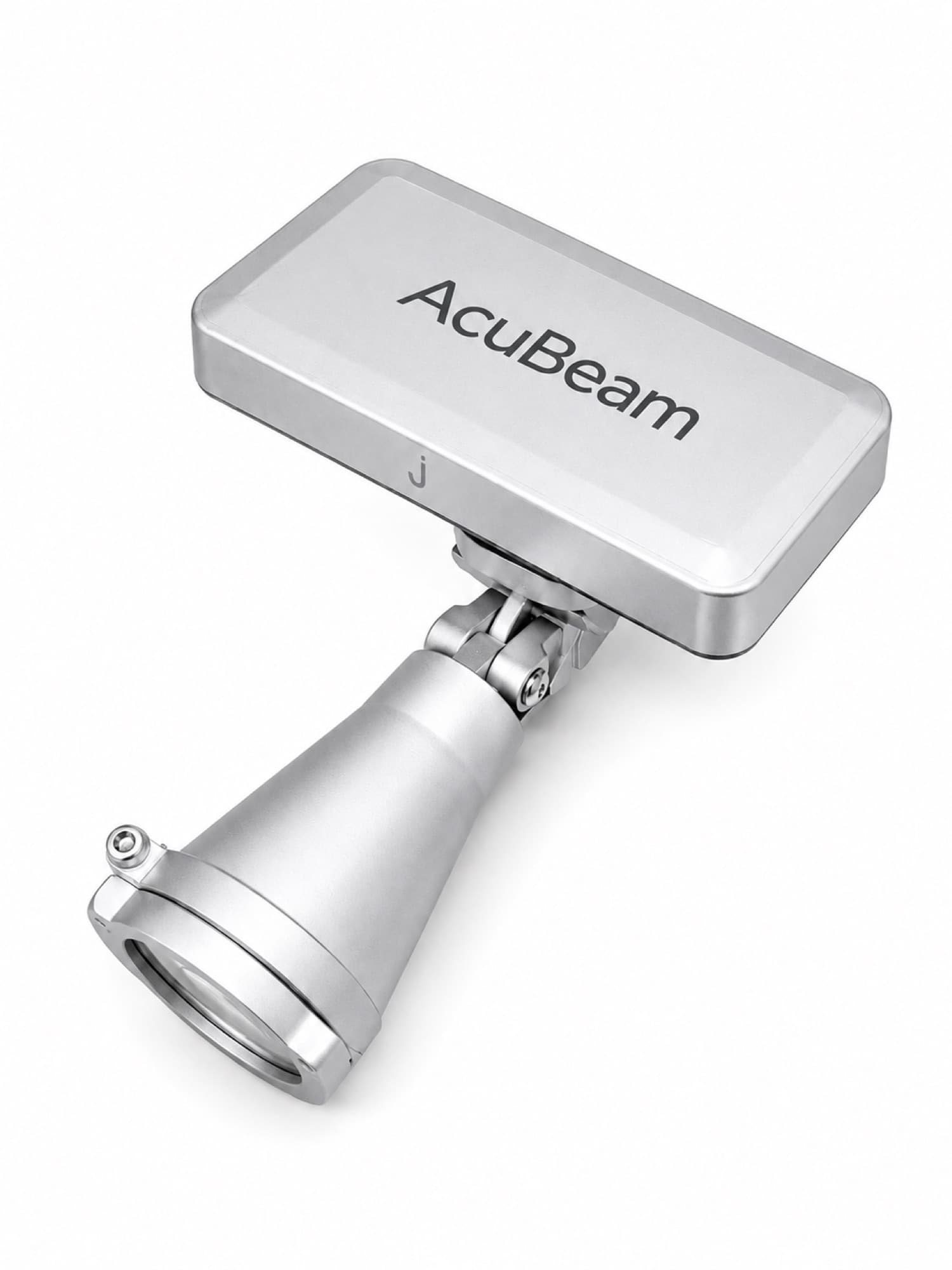
A wired headlight hangs its battery on your waist or clips it to your collar — your head stays light and the battery lasts all day without a thought; the price is the cable. Turn your head, stand up, change chairs, and it comes along; over the years, aging cables also tug at the frame. A wireless headlight builds the battery into the lamp or the frame — completely untethered, free to move between chairs; the price is runtime measured in hours, with all the weight riding on your head.
| Dimension | Wired headlight | Wireless headlight |
|---|---|---|
| Load on the head | Light (battery off-board) | Slightly heavier (battery on the lamp) |
| Runtime | All day, no management | 1.5–3 hours per battery, needs rotation |
| Freedom of movement | Constrained by the cable | Completely free |
| Switching chairs | Drag the cable along | Just walk over |
| Long-term upkeep | Cables age and need replacement | Battery cycle life is finite |
How to choose: if you work one fixed chair at high intensity all day, wired is worry-free; if you move between multiple chairs at a fast pace and value freedom to turn and stand, wireless fits better. With swappable-battery designs, the runtime shortfall of wireless has essentially been erased — it is the mainstream direction in clinical practice.
Weight and Balance: Do the Math Together with Your Loupes
Total load on your head = frame + barrels + headlight + battery. No single number looks impressive, but added together and hung on your nose and ears, four back-to-back hours of patients feel very different. In a survey of 614 dentists, the 12-month prevalence of musculoskeletal disorders reached 82.4%, with the neck the most affected region at 75.2% — sustained static load-bearing postures are a well-established risk factor.
When reading weight specs, the lamp head weight matters more than the total weight: mass hanging at the very front of the frame creates a forward-tipping moment, and the farther forward it sits, the harder it presses on the nose. A battery mounted at the back or on top balances the center of gravity. For reference: a straight-through loupe at about 43g paired with an 11g-class lamp head gives a total load around 60g — essentially unnoticeable territory; a prismatic Pro at 51–54g with a light approaches 70g, and then a nose pad and headband need to share the load.
One piece of advice for evaluation: do not judge after one minute of looking down. Wear the combination for a full half hour and finish a complete procedure — only then do the nose bridge, the backs of the ears, and the neck give you their honest report.
Battery Life and Charging Strategy
A single wireless headlight battery typically runs 1.5–3 hours. Do the math against your own schedule: one root canal takes 1–1.5 hours, so four treatments in a morning add up to roughly 3 hours of light — a single battery really cannot cover a full day.
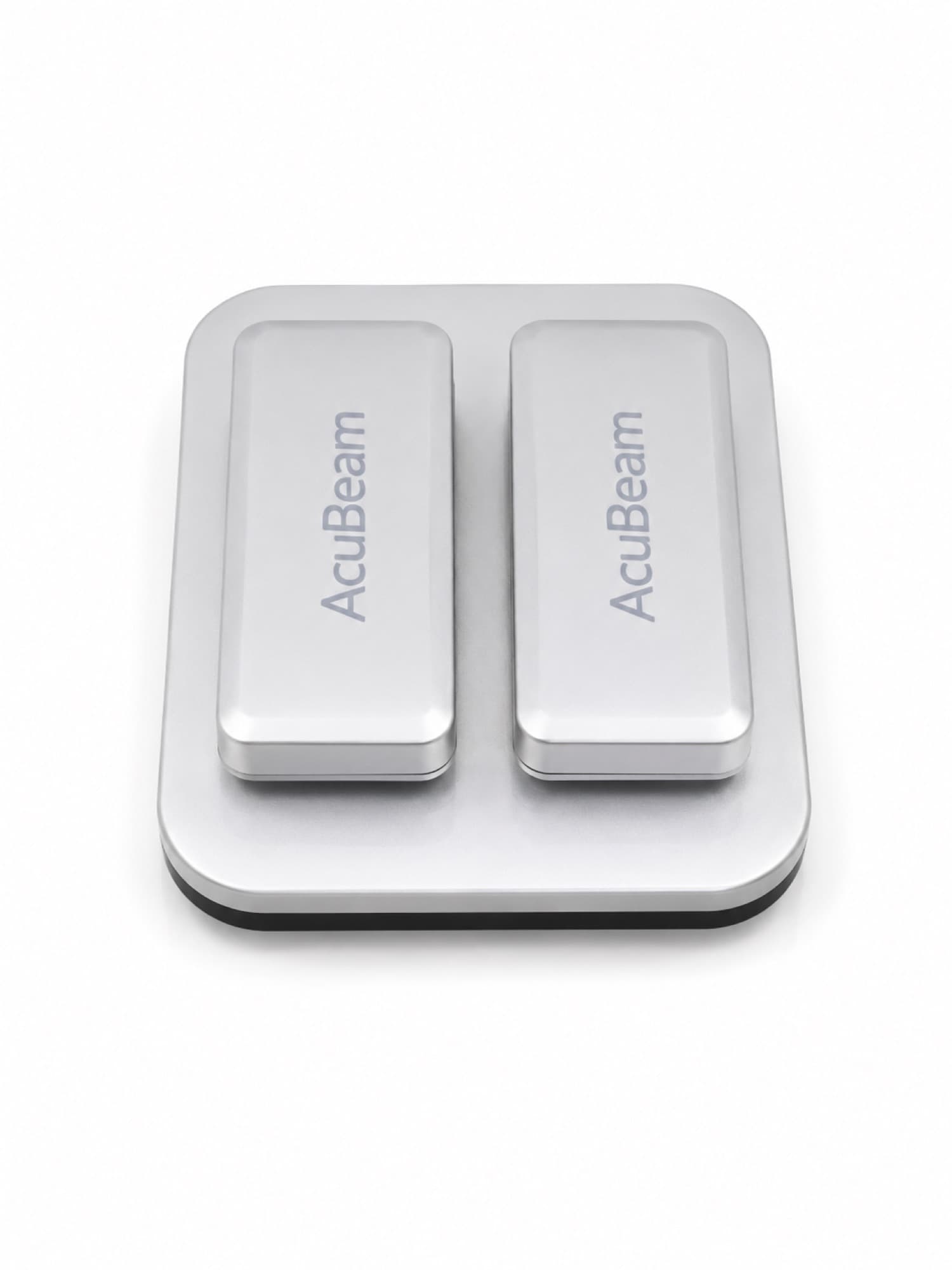
So the key is not how long one battery lasts, but how effortless swapping is: with multiple batteries and a charging dock in the kit, a swap takes ten seconds — effectively unlimited runtime all day. Build two habits to go with it: swap between patients instead of waiting for the light to die, and dock every battery to charge when you leave, so the next day starts full.
Batteries are consumables: a lithium cell is good for roughly 700 charge cycles, and after two or three years the runtime shrinks noticeably. Before you buy, make sure there is a channel for buying replacement batteries on their own.