
Why "How to Choose" Matters More Than "Which One to Buy"
Dental loupes are unlike most instruments: they are, in the strict sense, a custom product. Interpupillary distance, working distance, and prescription are all made to one person's parameters — once built, nobody else can wear them. That is also why custom loupes do not support no-questions-asked returns. Getting the parameters wrong does not mean "return it and start over"; it means a significant amount of money stuck in your hands.
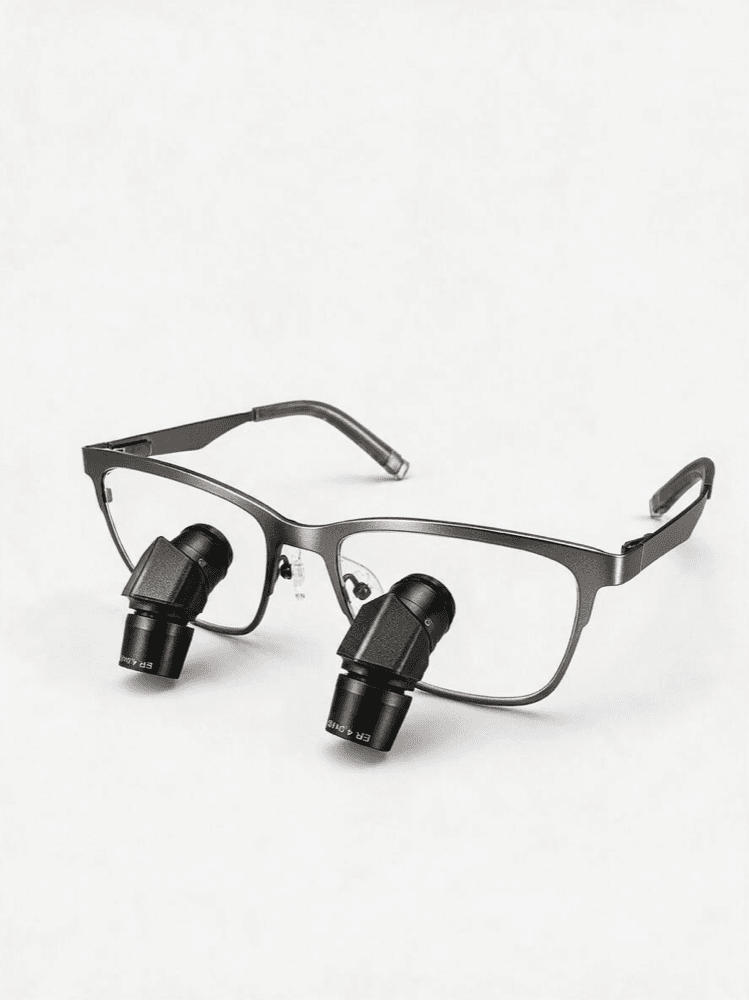
So the correct order is: define your usage scenarios and constraints first, then look at products. Concretely, three decisions drive 80% of the experience — type (straight-through or prismatic, which sets posture and budget), magnification (2.5X to 6X, which sets how fine and how wide you can see), and lighting (whether to add a headlight, which decides whether high magnification is actually usable).
One variable that is easy to underestimate is occupational health. Survey data shows that 82.4% of dentists suffer from musculoskeletal disorders (n=614), and loupes — prismatic loupes in particular — are among the posture interventions with the strongest evidence behind them. In other words, this is not only an investment in "seeing better," but also in "practicing longer."
One Table: Three Decisions, One Custom Fit
| Step | The question you must answer | General recommendation | Read more |
|---|---|---|---|
| Step 1 · Type | What is your budget? Is your neck already complaining? | Straight-through first for a first pair; consider prismatic if your neck already hurts or your work is mostly endodontics/restorative | Straight-through vs prismatic |
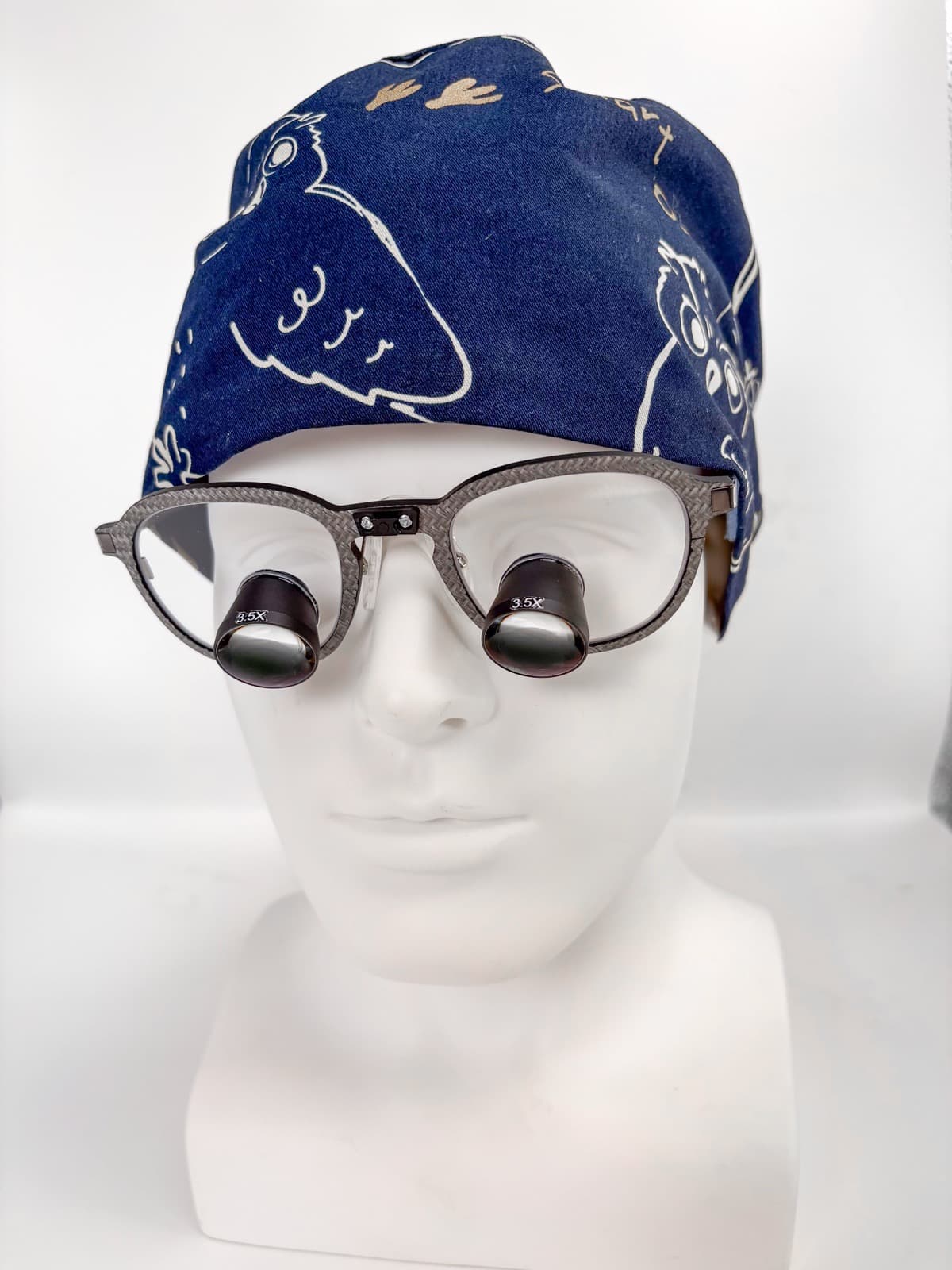
| Step 2 · Magnification | What procedures do you perform most? | GP/students 2.5X–3.5X; endodontics/precision restorative 4X–5X; surgery 5X–6X | Magnification guide |
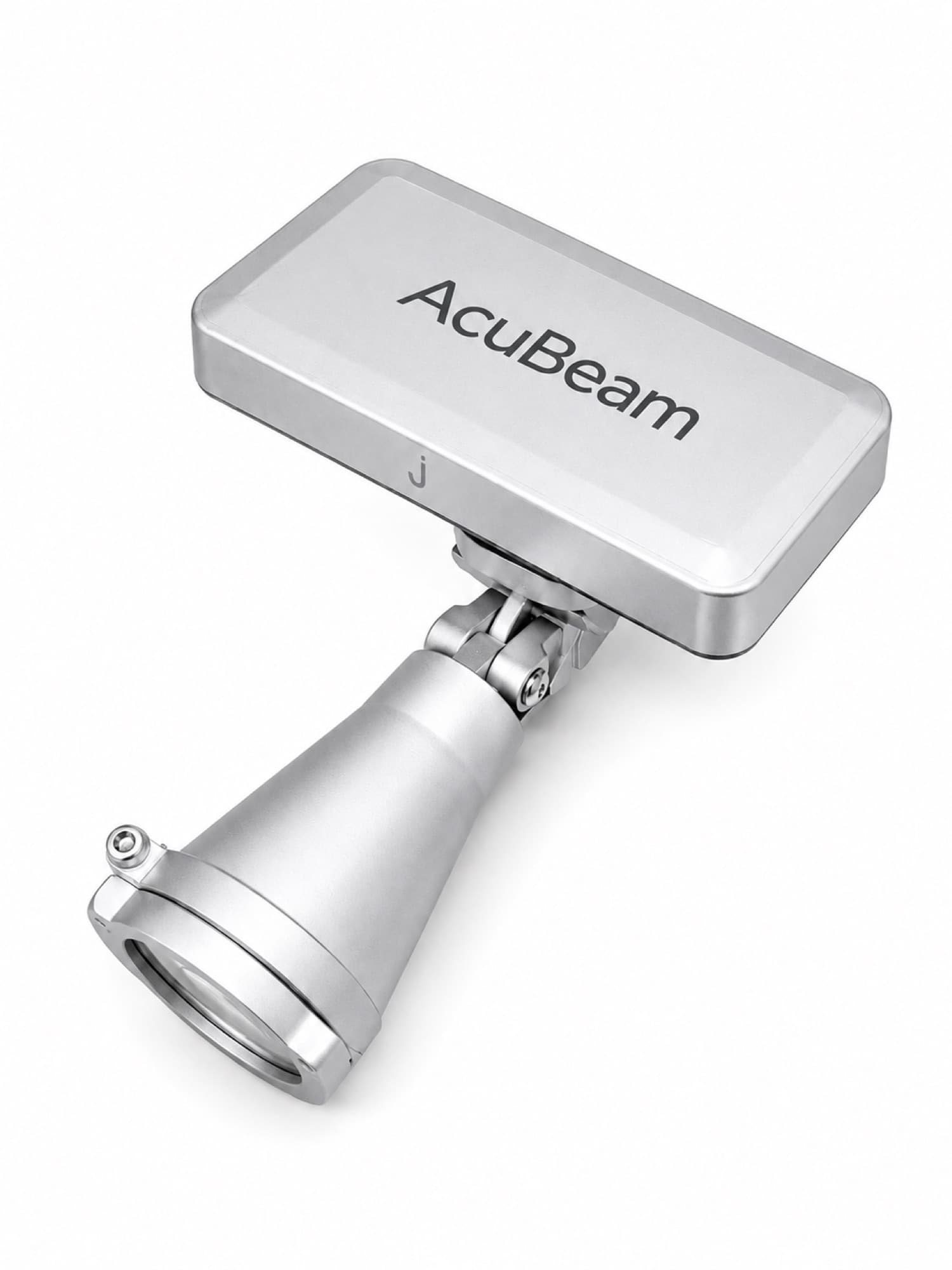
| Step 3 · Lighting | Is your operatory light enough? Are you at 4X yet? | Optional at 2.5X/3.5X; a headlight is strongly recommended at 4X and above | Headlight guide |
| Throughout · Parameters | How are PD, working distance, and prescription measured? | Custom-made to personal parameters is the baseline; avoid fixed-parameter generic models | Custom-fit guide |
The Six Most Common Buying Mistakes
Myth 1: Higher magnification is always better
Each step up in magnification shrinks both the field of view and the depth of field, and even magnifies the small tremors of your hands. For most general dentists, the "see more" of 3.5X is more useful than the "see finer" of 5X. Going straight to high magnification for a first pair is the purchase new users regret most.
Myth 2: Prismatic is always better than straight-through
Prismatic loupes solve a posture problem, not a clarity problem. If most of your day is examinations, prophylaxis, and routine restorative work, the wider field of a straight-through loupe is more efficient. The premium you pay for prismatic buys you a neutral neck position — it is worth it only if you need it.
Myth 3: Any generic pair bought online will do
Generic loupes are built for the "average person": fixed PD, fixed working distance. A few millimeters off, and the two images no longer fuse — dizziness, double vision, and mounting fatigue follow. Customization to your personal parameters is the baseline of a professional loupe.
Myth 4: Lighter is always better
The difference between 43g and 51g on your face is noticeable but adaptable. A loupe with poor optics that is 10g lighter is a debt you repay every single day. Judge optics and parameter fit first, weight second.
Myth 5: A headlight is an optional accessory
At low magnification, it genuinely is optional. But at 4X the field narrows, light transmission drops, and the operatory light is always blocked at some angle — without a headlight, high magnification looks noticeably dim, and the detail advantage is immediately discounted.
Myth 6: Buying the most expensive pair can't go wrong
A flagship that does not match your work is a waste. Define your scenarios first, then let the budget serve them — a well-matched entry model always beats a mismatched flagship.
Not Sure About Your Parameters? Talk to Us First
Being unsure about parameters is the norm when buying loupes — a 5cm difference in working distance or a 2mm difference in PD is the difference between a pair that disappears on your face and one you cannot wear. Rather than agonizing over spec sheets, let our specialists walk you through it. What happens after you contact us:
- Needs assessment: tell us your specialty, daily procedures, and budget; we recommend the type, magnification, and lighting that fit.
- Guided measurement: a specialist walks you through measuring PD, working distance, and prescription over a one-on-one video call.
- Custom build: your loupes are manufactured to your parameters — usually 2–3 business days — and shipped worldwide.
The process in four steps:
- Contact us and describe your needs and clinical scenarios; we recommend the most suitable configuration and provide a one-on-one quote.
- Confirm the configuration, then complete the guided measurement of PD, working distance, and prescription with our specialist.
- Your loupes are custom-built to your parameters — typically 2–3 business days.
- Worldwide shipping, with our team available for follow-up fit questions after delivery.