Buying Guide
Remote Dental Loupe Fitting: Is Video-Guided Measurement Reliable Enough?
2026-11-16 · Jizhou Select
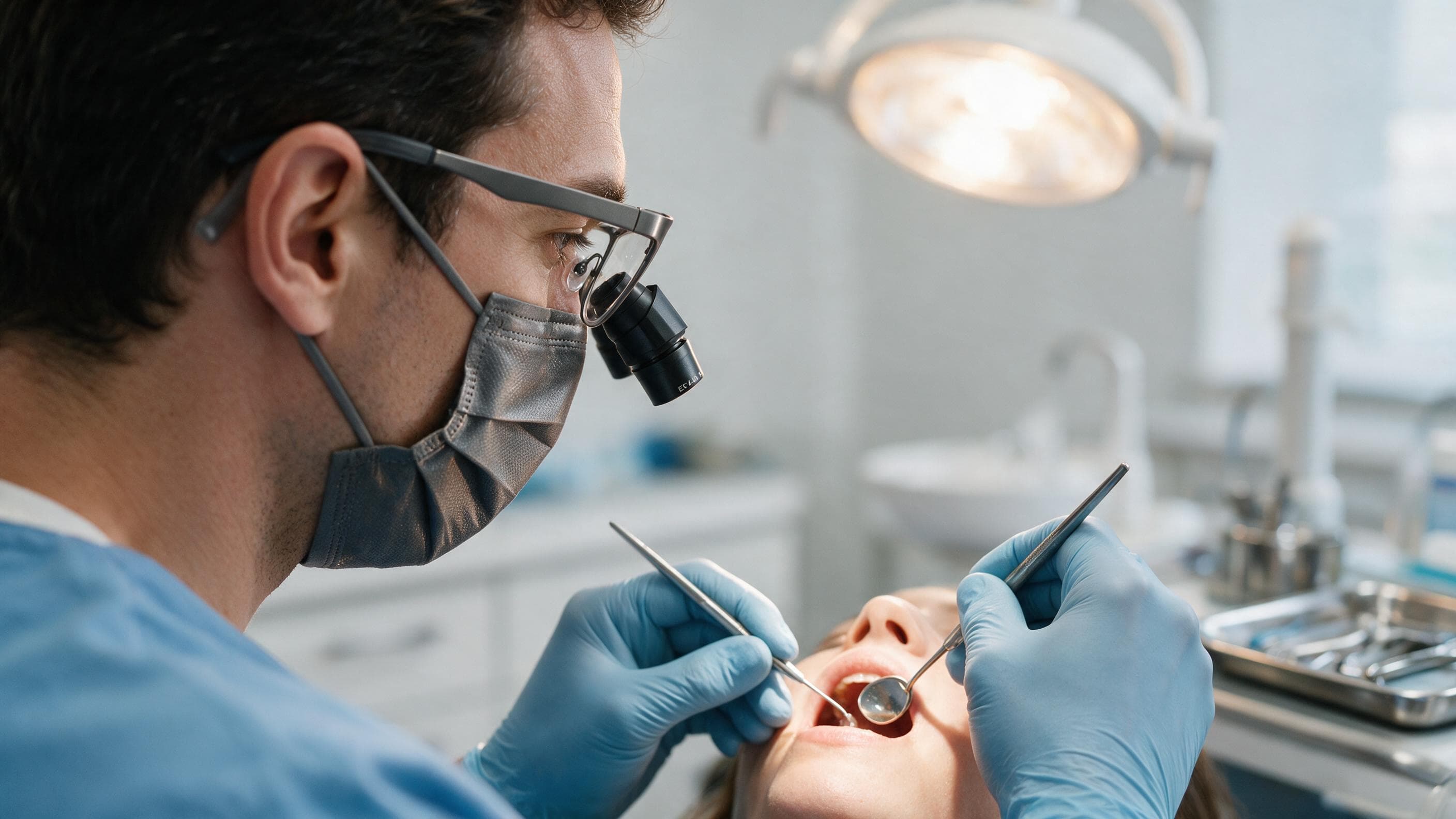
Remote fitting for dental loupes is reliable — but "remote" only covers guidance on how to measure, not a guarantee that the numbers are right. Whether it is worth it comes down to three things: whether your pupillary distance was re-measured with an instrument, whether your working distance was measured three times in a standard posture, and whether there is a trial period to catch problems after the loupe is custom built. Meet all three and video-guided measurement is good enough for most clinicians; skip one and the travel time you saved can turn into rework costs.
What "remote" actually means: guided measurement, not remote manufacturing
Every pair of loupes has to be custom built around three personal parameters: pupillary distance (PD), working distance and refractive power. Get one parameter wrong and the ergonomic benefit drops to zero — or turns negative. There is no separate remote-fitting page on the site; the stated process is "one-to-one video guidance from a consultant during the trial to help you measure." After purchase you submit your PD, working distance and other parameters through the support channel, and the details are confirmed through the specialist's service process before anything is built. In other words, video standardizes the measuring actions — the loupe is still made one at a time, to your numbers.
The video measurement process: three steps that push the error down
Step one: pupillary distance. Start with your prescription slip as a reference. Then self-measure in front of a mirror — expect around 2–3mm of error. Finally, re-measure with a pupillometer, which brings the error within 1mm; that is the figure the custom build is made to. Note that near PD is roughly 2–4mm smaller than distance PD, so state clearly what the measurement is for when you report it.
Step two: working distance. Sit in your standard posture and have a colleague lie back in the dental chair to simulate a patient — back straight, both hands at the treatment site — then measure the straight-line distance from the corner of your eye to the treatment site. Take three measurements and average them. Report exactly what you measure; do not round to fit a stock setting, and better too long than too short. The 340/420/460/500mm+ figures are common landing points for reference, not sizes to force your measurement into.
Step three: refractive power. If you have a prescription for myopia, astigmatism or hyperopia, it can be built in. Hand the prescription slip to your consultant — that is more reliable than dictating numbers verbally.
The value of video guidance is correcting things on the spot: the consultant can see your seated posture, where the ruler starts and where it ends, and can catch the moment your body tilts when you measure yourself or the tape drifts off a straight line — and have you redo it immediately. That is what makes remote workable.
Where the error comes from: three criteria for deciding whether it is worth it
Criterion one: was PD re-measured? A prescription slip alone, or mirror self-measurement, carries 2–3mm of error; the custom build is made to a pupillometer re-measurement. If you have no way to re-measure, focus your verification on the trial period.
Criterion two: was working distance measured three times and averaged? Guessing at the nearest stock setting, or bending your measurement to fit an off-the-shelf size, is the most common source of error in remote fitting. Report what you measure; better long than short.
Criterion three: is there a trial period as a safety net? There is a 5-day free trial, counted from the day after delivery. If you are not satisfied, send the loupes back and the full deposit is refunded within 48 hours of the returned product being received. Note, however, that custom products cannot be returned or exchanged without a quality issue, and "improper measurement does not count as a quality issue" — so the trial is not a formality. Use the loupes in real clinical work during it.
Meet these three criteria and remote fitting is worth it for the saved back-and-forth, the recorded parameters and a trial you can verify against. If you cannot meet them, complete your measurements first and then decide.
FAQ
Q: Is video-guided PD measurement accurate? A: Video can correct your technique, but it cannot replace an instrument. Mirror self-measurement carries about 2–3mm of error, a pupillometer re-measurement is within 1mm, and the custom build is made to the re-measurement. If you do not have access to a pupillometer, have it re-measured first at an optical shop or eye care practice.
Q: What working distance should I report? Can I just pick a stock setting? A: Measure three times in a standard posture and average them, and report exactly what you measure. Do not round to a stock setting; better long than short. The 340/420/460/500mm+ figures are common landing points for reference only.
Q: What if the remotely fitted loupes do not work out? A: Use the 5-day trial. If you are not satisfied, send them back and the full deposit is refunded within 48 hours. But improper measurement does not count as a quality issue, so evaluate them in real clinical work during the trial — not just for a few minutes.
Q: When is video-only fitting not advisable? A: When you cannot re-measure your PD, when no one can help you simulate the dental-chair posture for working distance, or when you have no confidence in your parameters at all. In those cases, complete the measurements first or have them re-measured in person before deciding on a remote custom build. It is not about whether remote fitting works — it is about whether your measurement conditions are good enough.