Ergonomic Solutions
How a Headlight Reduces Neck Fatigue
2026-07-05 · Jizhou Select Content Team
TL;DR · 30-Second Read
- The core problem: the overhead light is blocked by your head and hands, so shadows are inevitable deep in the oral cavity — and you tilt and twist every day to find the light
- How the fix works: a headlight's beam is coaxial with your line of sight — the light follows your eyes, and shadows are eliminated in principle
- Selection essentials: illuminance, color temperature and rendering, weight and runtime — and matching the headlight to your loupes so the spot and the field align precisely
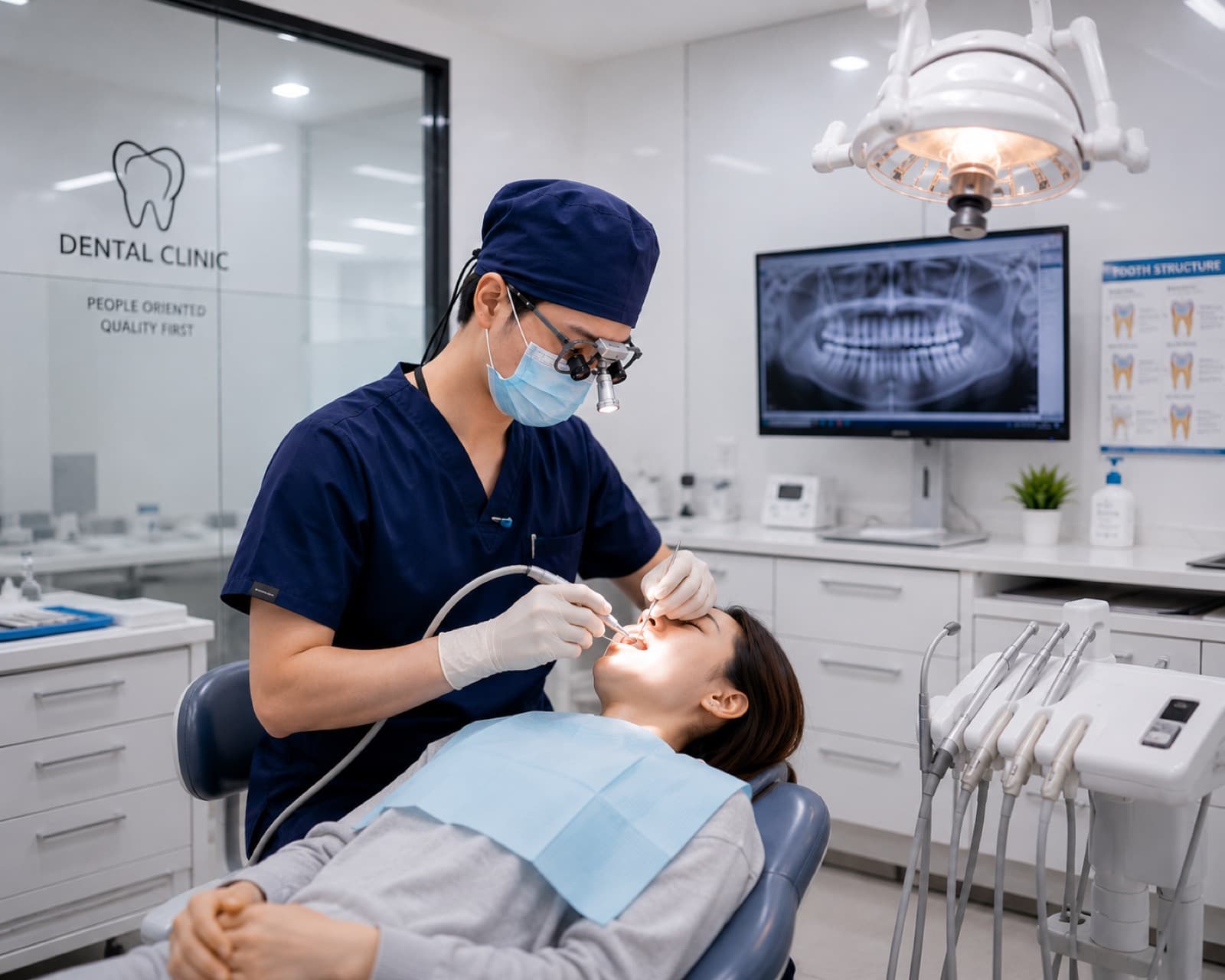
The Problem
The ceiling-mounted dental light seems to illuminate the oral cavity, but your head and hands block its path and cast shadows deep inside. So you tilt your head, lean sideways, adjust your angle — sacrificing posture again and again to chase away shadows. These "bending for light" movements can add up to hundreds a day.
Layered on top of the head-down forward lean, they form a daily source of neck and shoulder strain — lighting bears its share of responsibility for the 75.2% neck and 49.7% shoulder prevalence (Zhang et al. 2021).
Why It Happens
There is an angle between an overhead light source and the operating field. When your hands and instruments enter the light path, shadows appear. The only real solution is to emit light along your line of sight — that is the design logic of the headlight: the beam is coaxial with your gaze, so wherever your head turns, the light is already where you are looking.
Ergonomics is explicit about lighting: shine light directly onto the operating field, avoid strong light hitting the eyes, and keep ambient lighting adequate with low light-dark contrast — all to reduce head-down and head-tilting postures caused by poor visibility.
How to Fix It
Four parameters matter when choosing a headlight:
- Illuminance: an adjustable 20,000-50,000 LUX range is the most practical — brighter is not always better, and excessive brightness can dazzle
- Color temperature and rendering: neutral white light close to natural daylight (around 5,800K) with CRI above 90 renders tooth structure and soft tissue in true color
- Weight and runtime: the lighter the whole unit the better (in the tens-of-grams class); runtime should cover at least half a clinic day, and swappable batteries add flexibility
- Match with your loupes: the light spot must fully cover the magnified field — mixing brands often produces "the light and the view don't line up"
A headlight is one part of the combination. From an ergonomics standpoint, the full equipment list worth investing in:
- Saddle Stool (Seating): Promotes anterior pelvic tilt to maintain natural lumbar curvature; Reduces lower-back pressure
- Dental Loupes (Vision Aid): Reduces forward-leaning posture; Reduces neck strain
- Dental Microscope (Vision Aid): Fully upright operation; Excellent magnification
- Ergonomic Instruments (Instruments): Reduces hand load; Reduces grip fatigue
References
[1]Practice Dentistry Pain-Free: Evidence-based Strategies to Prevent Pain and Extend Your Career
Valachi B, Valachi K · Posturedontics Press (monograph) · 2008
A classic monograph on clinical dental ergonomics, systematically covering practitioner and patient positioning, stool and dental chair adjustment, instrument selection, and workplace exercise. The primary methodological reference for this site's correct-posture, equipment-adjustment, and workstation-layout content.
[2]A systematic review of musculoskeletal disorders among dental professionals
Hayes M, Cockrell D, Smith DR · International Journal of Dental Hygiene, 7(3): 159-165 · 2009 · DOI: 10.1111/j.1601-5037.2009.00395.x
A systematic review of the prevalence and risk factors of musculoskeletal disorders among dental professionals: prevalence is consistently high (mainly neck, lower back, and shoulders), associated with prolonged static load, poor posture, and repetitive tasks. One of the primary literature sources for this site's posture-hazard and prevention framework.